Service scope
When whole house repiping may fit
Whole House Repiping in Houston, TX is intended to replace a failing hot-and-cold water distribution system with a coordinated new layout instead of continuing isolated repairs. It may be relevant when leaks recur in several areas, pressure is restricted, water is discolored, pipe material is failing, or insurance and renovation decisions require a broader plan. These symptoms start the investigation, but the property conditions and available documentation must support the final recommendation.
The working system includes the incoming service handoff, main shutoff, hot and cold trunks, branches, fixture supplies, hose connections, water heater, attic, walls, and slab penetrations. A proposal that skips those boundaries can leave important connections, testing, access, or restoration outside the price without making that limitation obvious.
Inspection and method selection
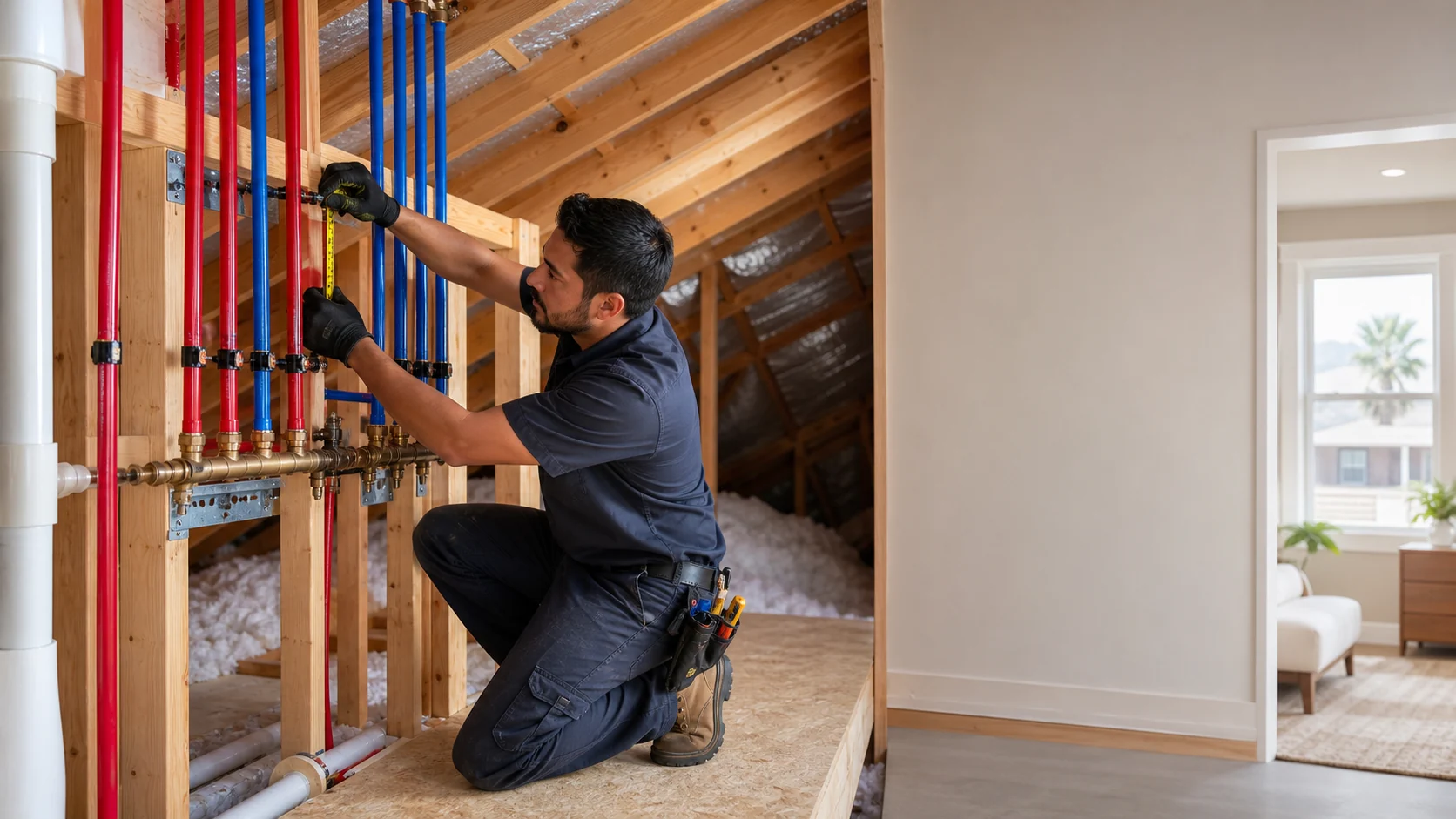
The work may involve system inventory, material and sizing review, route planning, phased shutdowns, new distribution installation, fixture reconnection, pressure testing, inspection, and restoration coordination. Not every property needs every step. The operator should explain which observations support the selected method, what remains uncertain, and what additional access or testing could change the recommendation.
What a written scope should document
Ask for the included fixtures and branches, chosen material, route, access openings, shutoff plan, testing standard, permit responsibility, and restoration limits. The estimate should also identify the company and Responsible Master Plumber, insurance status, permit responsibility, inspection, cleanup, protection, start assumptions, schedule, payment milestones, exclusions, change-order method, and warranty terms.
Repair, access, and restoration boundaries
a whole-house repipe should be based on distributed system condition and lifecycle value rather than using one accessible leak as the only justification. Plumbing, excavation, demolition, structural work, remediation, drywall, painting, flooring, landscaping, paving, and utility work may be performed by different parties. The proposal should state which party owns each boundary.
Cost and comparison variables
Pricing commonly changes with home size, fixture count, stories, material, attic and wall access, routing, occupied-space protection, permit, testing, insulation, drywall, and painting. Compare bids by scope and evidence rather than price alone. A lower number can exclude restoration, permits, testing, reconnections, disposal, or work that another proposal includes.
Preparing the property and request
Gather the exact address, property type, occupancy, first symptom, timing, affected fixtures or buildings, prior repairs, known material, available photos or video, utility or MUD information, parking, gates, pets, tenant contacts, and acceptable shutdown windows. Do not share access codes or payment data in the web form.